Country room
Ethiopia
Six of the fourteen directors in this room are women, a proportion with few equals on the continent. Yet every film signed by a woman is from 2015 or later — until that date there is not one woman director in this room. None in forty years, six in ten: how fast who is able to film can change in a cinema, this room shows.
How fast can who is able to film change in a cinema?
There are four stops in this room. The first is Gerima and the diaspora: in 1976 a director living in America brought this country's history to cinema for the first time and remained at this room's centre for forty years. The second is the local cinema — a generation filming with its own money in Addis Ababa and the countryside in the two-thousands. The third is the woman's voice: films arriving after 2015 that fill half this room. The last is the present.
Read more
Three-quarters of the films here are co-productions, and only four are entirely local.
The Chain
1976 → 2024

Harvest: 3000 Years
A whole day of one family in a village just before the land reform. Gerima filmed in Amharic and this country's history entered cinema for the first time. Six years later the same director films a veteran in America.

Ashes and Embers
A Black veteran back from Vietnam cannot find his place in America. Gerima made this film not in Ethiopia but in Los Angeles, and the country never appears. Eleven years later a model at a fort falls three hundred years back.

Sankofa
Slavery is filmed not as a historical subject but as something still continuing. A six-country co-production, it takes place nowhere in Ethiopia. Thirteen years later the camera passes for the first time to a director living in the country.

Menged
A road in the countryside and a boy walking on it. Local cinema enters this room here, and the first to enter is a short film. Two years later a doctor studying in Germany returns to the Derg years.
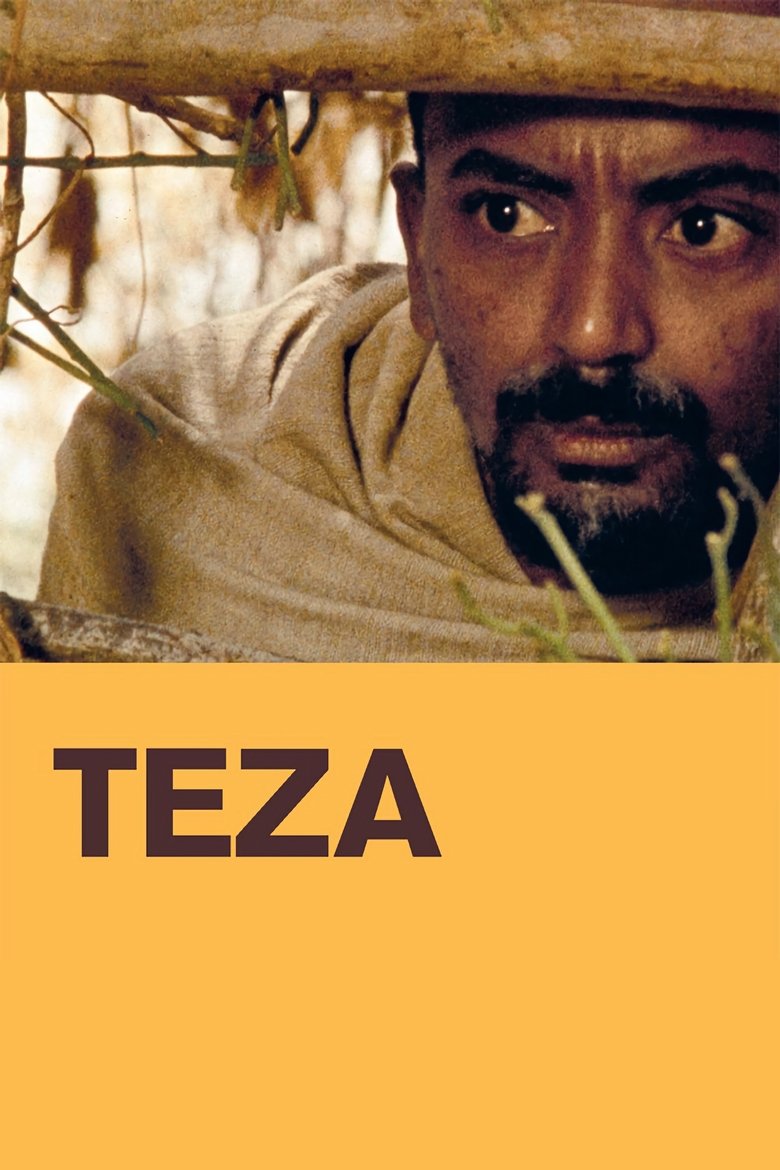
Teza
Two countries, three periods, and scenes arriving in the order they are remembered. After thirty-two years in America Gerima told his own generation's story. The next year a marathon runner wins barefoot.

The Athlete
Abebe Bikila's life and an accident that comes after a victory. This became the first film this country submitted to the Academy. Five years later a lawyer defends a girl who killed her abductor.

Difret
The telefa custom and state law meet in the same court. The film was taken from a real case and was temporarily halted in Ethiopia by a court order. The next year a boy refuses to give up his lamb.

Lamb
A boy sent to live with relatives and the one thing he brings with him. With this film Zeleke became the first Ethiopian director in Cannes's official selection. The same year this room's first woman director films a night in Addis Ababa.

Price of Love
A taxi driver, a sex worker, and a night in which nobody is rescued. Hailay was the first woman director to enter this room, and in the forty years before her there is no signature by a woman. The same year a short film follows a girl growing up in the countryside.

New Eyes
The girl does not leave the village and what she sees changes. In 2015 three signatures by women arrived at once, and this room's balance changed that year. Two years later, in Harar, a man feeds hyenas every night.

Hairat
A man, a few hyenas, and an unexplained ritual. In her short Beshir only records and never asks why. The next year a girl lives her last weeks before migration.

Fig Tree
1989, the civil war's last year, and two young people who cannot leave together. Davidian filmed her own family's migration from Israel. The next year an actress writes and directs her first feature herself.

Min Alesh?
A flat, a family, and something nobody says. This is the only film in this room in which a woman is both in front of and behind the camera. The next year a director searches for an aunt her family never speaks of.

Finding Sally
A revolutionary who disappeared during the Red Terror and a family that chose silence. Dawit showed memory not as a source but as a field on which there is no agreement. The next year a filming that lasted ten years in the highlands is completed.

Faya Dayi
Khat fields, black-and-white images, and a film without narrative. Beshir filmed for ten years, and what remains is leaf, smoke, light and voices heard in between. Three years later, as a community prepares to migrate, the head of the family dies.

Alazar
The decision to migrate has been made and a funeral intervenes. The chain began in 1976 with a village before the land reform and ends forty-eight years later with the decision to leave the village — in between, for forty years no woman director entered this room, and in the last ten six did.

