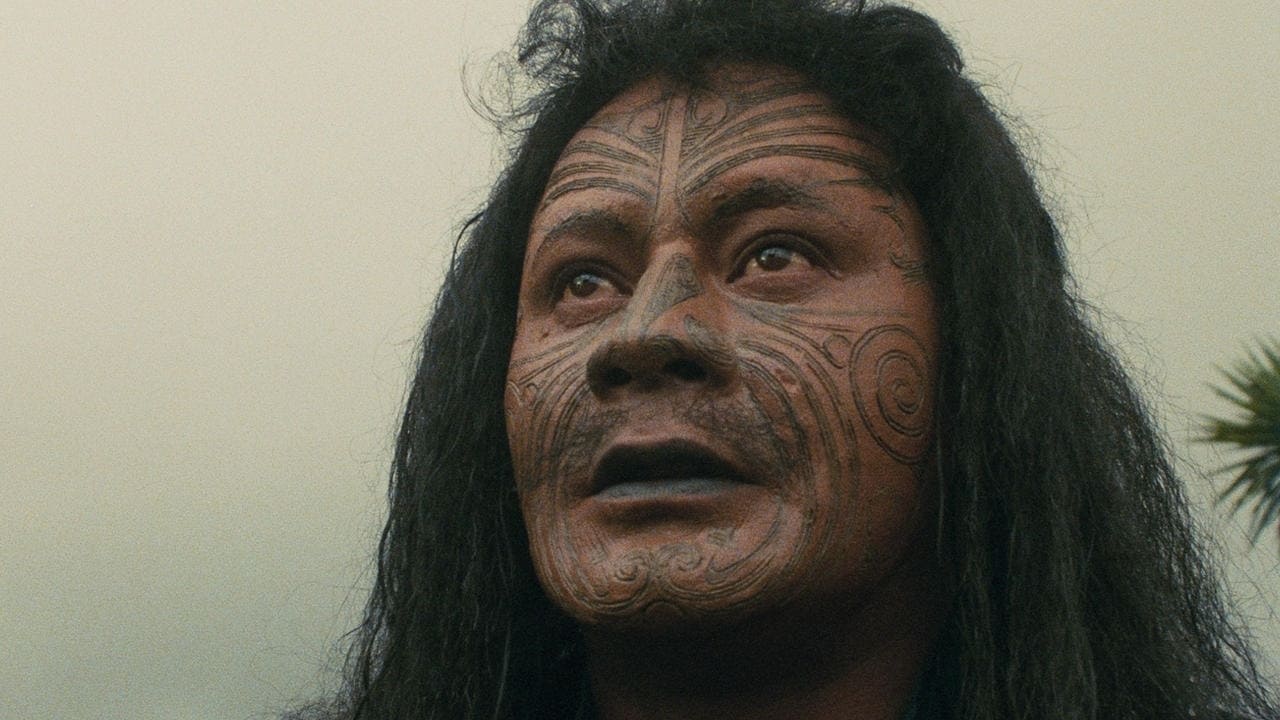
Country room
New Zealand
The world's first Māori feature was made in New Zealand in 1987, and before that date films about Māori life were made by others. Of the forty-five films in this room, fifteen are by Māori directors and ten are about Māori but are not. There is exactly one film made entirely in te reo Māori, and its director is not Māori either.
Who is able to tell a people's story?
1983 → 2022

Utu
The nineteenth century, the colonial wars, and a Māori soldier seeking revenge. Murphy is a Pākehā director who chose to tell his film from the Māori side — in those years nobody else did. The next year the camera withdraws to a valley and an eleven-year-old girl watches her father die.

Vigil
Mountain, rain, and a family that does not speak. Ward filmed the landscape not as a backdrop but as a weather that takes a person in. A year later a man wakes and there is nobody left in the world.

The Quiet Earth
The country's sparse population turned into a science-fiction premise here, and no sets were required. One of the first examples of New Zealand cinema to be noticed abroad. Two years later the camera is in a Māori director's hands for the first time — four years after this chain began.

Ngāti
A town, a freezing works about to close, and a young doctor arriving from outside. Barclay placed the camera inside the community and made the world's first Māori feature — he also put forward a term to name that cinema. The same year somebody starts making an alien film in his own back yard.

Bad Taste
Shot at weekends over four years on almost no budget. Jackson began with his friends and a decade later was directing the largest productions in the world. The next year a Māori woman director makes her first fiction feature.

Mauri
Nobody uses their real name. Merata Mita set a story of assumed identity in a coastal town and made the first fiction feature directed by a Māori woman. The same year a group of miners digs a tunnel and travels seven hundred years forward.

The Navigator: A Medieval Odyssey
They set out from fourteenth-century England and arrive in twentieth-century New Zealand. Ward ran two times through the inside of a mountain and split the film between black and white and colour. Five years later a piano is left on a beach and its owner does not speak.

The Piano
Campion became the first woman director to win the Palme d'Or at Cannes. The Māori characters in the film remained in the background, and that background is this room's question. The next year a Māori director films the same country's state housing.

Once Were Warriors
Beth opens the door and her husband has already been drinking. This is the country's best-known film and its director is Māori — the image of New Zealand abroad changed with it. The same year a murder committed in Christchurch in 1954 reaches the screen.

Heavenly Creatures
The imaginary world two girls build ends in a real murder. After this film Jackson went to Hollywood and took the country's landscape with him. Eight years later a girl wants to lead the tribe and the tradition expects a boy.

Whale Rider
Paikea's name comes from a thousand years back, and so does the film's resolution. This is the most widely watched Māori story in the world, and its director is a Pākehā woman. Eight years later a boy imagines his father as Michael Jackson.

Boy
His father comes out of prison and the truth is nothing like what he imagined. Waititi filmed poverty not as tragedy but as the child sees it. Four years later a film is made in which not a word of English is spoken.

The Dead Lands
The pre-contact Māori world is built by its own rules and no explanation comes from outside. The only film in this room entirely in te reo Māori, and its director is Fijian-New Zealander, not Māori. Two years later a boy and a bad-tempered man get lost in the bush.

Hunt for the Wilderpeople
Four months in the bush with the whole country behind them. After this film Waititi moved to Marvel and carried the same humour there. Five years later two Māori women directors tell of a fifty-year separation.

Cousins
Three cousins, fifty years, and a child the state took from her family. Adapted from Patricia Grace's novel and directed by two Māori women. The next year a Māori director reconstructs a police raid of 2007.

The Raid
A raid on Tūhoe land is told in the form of an action film, and the event is real. The chain began in 1983 with a Pākehā director's Māori revenge story, and thirty-nine years later a Māori director tells the same matter.
Directors in this room