Country room
Palestinian Territories
Palestinian cinema exists; in the production records it does not. Of the twenty-four films in this room, only five show Palestine first in the list of production countries; sixteen place it somewhere between second and tenth, and three not at all. The films are there; the country has to be looked for.
Can a country's cinema exist without the country's name?
1981 → 2025

Fertile Memory
Two women — one working in a factory in Nazareth, the other in Ramallah refusing to sell her land. The first Palestinian film to travel abroad. Six years later the same director films a wedding and seats the governor at the table.

Wedding in Galilee
To have the curfew lifted, the military governor is invited to the wedding. It took the critics' prize at Cannes, and this is how Palestinian cinema first announced that it had a name. Seven years later the camera goes into a house in Gaza and does not come out.

Curfew
One family, one day, closed shutters. Masharawi grew up in a refugee camp and brought the camp he grew up in to the screen. Two years later, in Nazareth, someone sets up a camera and starts filming nothing happening.

Chronicle of a Disappearance
Suleiman's first film, and there is no event in it. A shop, a flat, and a country in the process of disappearing — this method would last thirty years. Six years later the same method takes the jury prize at Cannes.

Divine Intervention
At the checkpoint two lovers hold hands and say nothing. The absurd here is not a style but the shape the situation already has. Three years later two young men set out from Nablus towards Tel Aviv.

Paradise Now
It was nominated for an Oscar and the Academy argued over how to write the country's name. The film vindicates no side, and for exactly that reason drew objections from both. Three years later somebody comes from Brooklyn and asks for her grandfather's money.

Salt of This Sea
Annemarie Jacir's first film, and the first feature directed by a Palestinian woman. Exile here is not a feeling but a bank account. The following year Suleiman tells sixty years of his own family in four chapters.
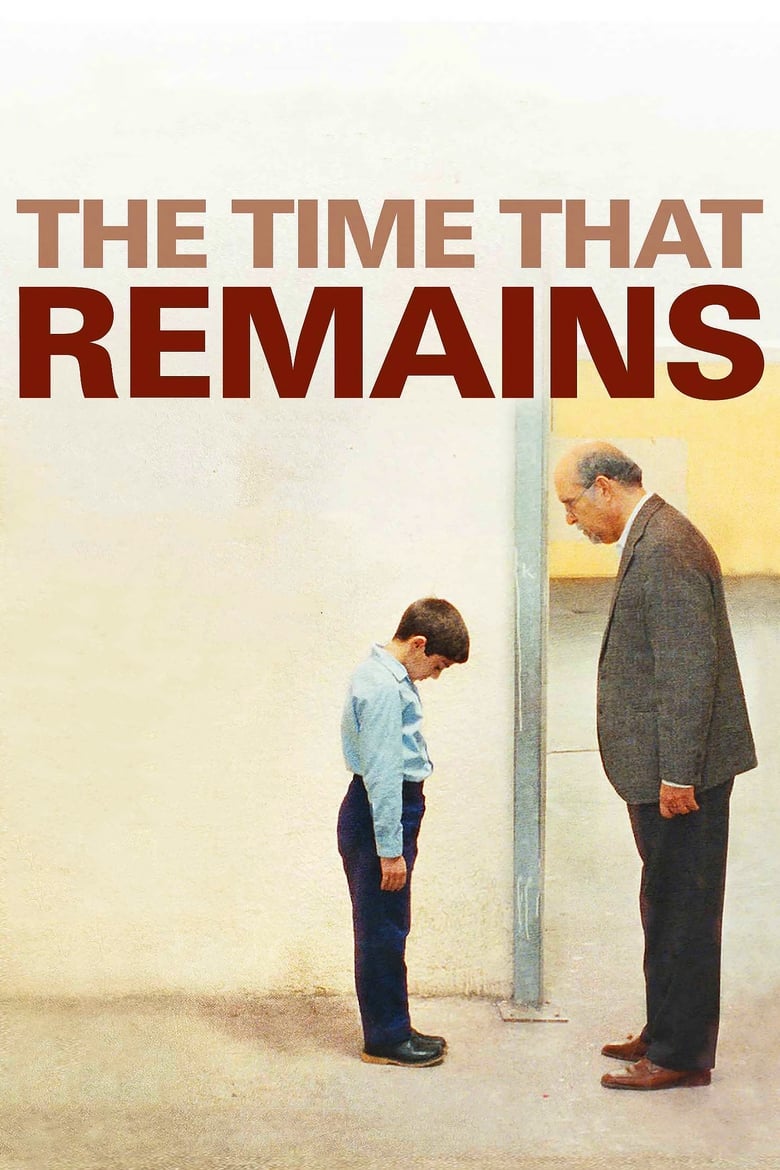
The Time That Remains
From 1948 to now, from his father's story to his own silence. The production record does not mention Palestine. Four years later a wall is climbed and a film is financed entirely inside Palestine.

Omar
The wall is climbed every day and the interrogation room is the same each time. The first large demonstration of what contemporary Palestinian cinema could do with its own money. The next year a boy runs from the camp and sets out to find his father.

When I Saw You
Jordan after 1967, a camp, and a boy who wants to go back. Jacir tells the question of refuge through a child's impatience. A year later the camera enters a prison and a child is born there.

3000 Nights
Mai Masri moved from documentary to fiction and shot her first feature inside a prison ward. Adapted from a real case. Two years later a father and son go door to door in Nazareth with invitations.

Wajib
One day, one car, two generations and everything left unsaid. Jacir's third film and her best-loved work. Two years later Suleiman goes looking for his country abroad.

It Must Be Heaven
Police in Paris, guns in New York, and the same unease everywhere. Seven countries financed it, none of them Palestine. Two years later, in Gaza, a fisherman finds a statue of Apollo in his net.

Gaza Mon Amour
The Nasser brothers were born in Gaza, filmed from Jordan because they could not get in, and made a love story. The next year a photograph taken in a Bethlehem salon binds two women together.

Huda's Salon
Drawn from a real case and played out between two women. For the first time Abu-Assad fitted political tension entirely into a closed room. Two years later a team of four finishes a five-year record.

No Other Land
The country's first Oscar came with a documentary. The chain began in 1981 with the portrait of two women and ends forty-three years later in a record of demolition.

