Tags
Historical

The town itself is an archive: the texture of the streets, the order of the façades, the craft of the doors. Arın films architecture not as art history but as the shell of daily life, never letting you forget that people still live inside these houses.

The bazaar is measured in the steps of someone who has walked it for forty years. Instead of describing the place from above, Arın moves through it from inside; traders, corridors and stalls emerge as a route rather than a map.

Everything early Turkish cinema inherited from the stage is visible here: the blocking, the register of the acting, the staging of the courtroom. Ertuğrul is not content to show the village girl is right; he also shows where the verdict is actually made.

Eight hours. Survivors speak of those declared rightists in 1957 and sent to camps in the Gansu desert. Wang Bing interviewed more than a hundred and twenty people across thirteen years; by the time filming ended most of them had died.

An actress prepares to play a resistance fighter who lived fifty years earlier. Three times fold into each other: her present, the rehearsals, the forties. Hou does not say which is which.

Three love stories, three periods, the same two actors. The 1911 segment is shot like a silent film — intertitles, nobody speaks.

A musician who failed in Taipei goes home and puts a band together. In between, seven letters written sixty years earlier are read aloud. It became the most watched local film in Taiwan up to that point.

It tells a real miscarriage of justice. The army sued, the director was tried in a military court, and the film was banned for two years.

Dozens of lives crossing in a Madrid café after the war. Poverty here is not an event but the air.

A deserter and four sisters in Spain before the Republic. It won the foreign film Oscar.

In postwar Catalonia a boy learns the truth his family has hidden. Shot in Catalan, it swept the Goyas.

Snow White as a silent film set in the world of bullfighting. Making a wordless film in 2012 is a claim in itself.

In the nineteenth century a man of extraordinary height tours Europe with his brother. A Basque-language spectacle.

A thief is spared the gallows because he happens to be the double of a dying warlord, then propped on the throne to keep the enemy guessing. Kurosawa's late colour epic watches a shadow take a man's place.
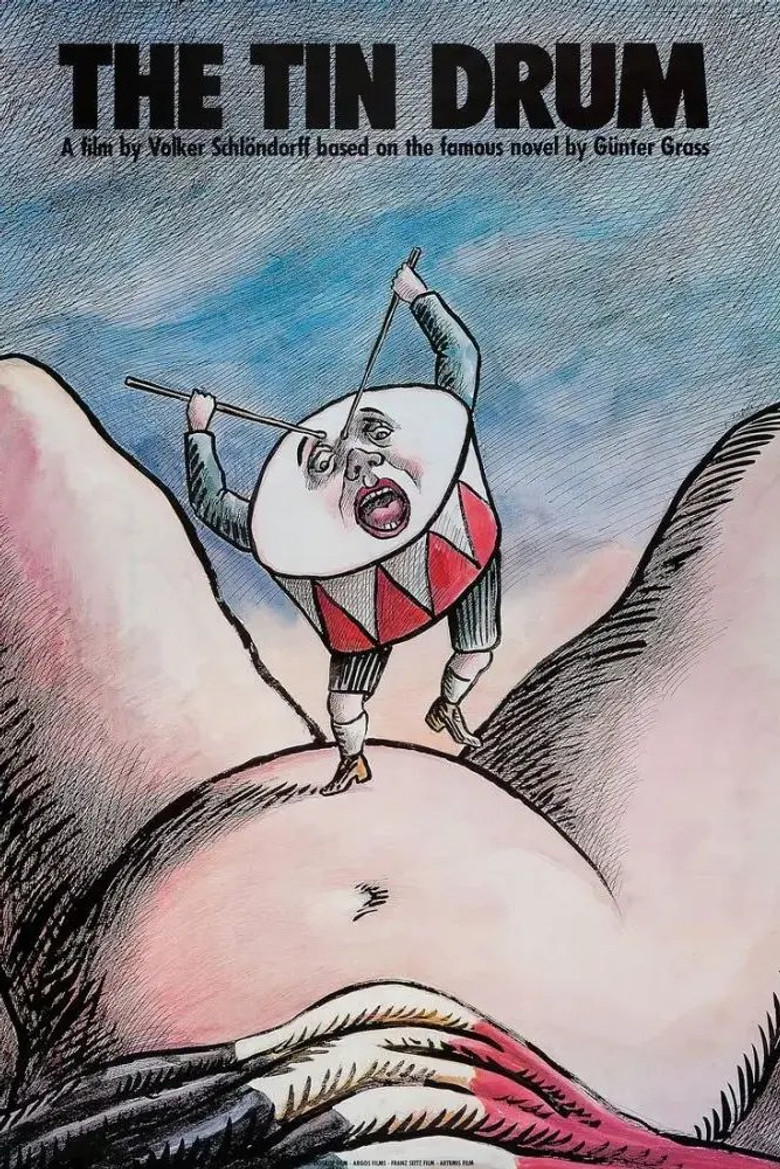
On his third birthday a boy decides to stop growing, and beats his tin drum through the rise of Nazi Germany. From Günter Grass's novel, an allegory where the grotesque and the magical are inseparable.

Hidden in a Belgrade cellar, a band of people keep manufacturing weapons, unaware the war they think they're fighting has long ended. A war that supposedly ended runs on for years underground; above it, a loud and drunken carnival.

Makavejev reassembles Yugoslavia's first sound feature — a 1942 melodrama shot under Nazi occupation by a strongman-acrobat — with new interviews and archival scraps. A film about a film, and about survival.

Behind the locked door of a Belgrade apartment lies a room sealed for seventy years — and the director's mother, a lifelong dissident. Turajlić turns one family's home into the history of a country.

A samurai grows fixated on a married woman he once rescued, and will risk everything to possess her. One of early colour cinema's most sumptuous works, watching desire curdle into ruin.

In 18th-century South America, a Jesuit mission collides with the empires that would hand it to the slave traders. Under waterfalls and Morricone's score, faith loses to politics.


