Tags
Short Film

A child's plan collides with an adult schedule. Toğaç does not inflate the collision; the whole weight of the short rests on a spoiled eagerness carried quietly.

Night, an abandoned stopping place, and a brief closeness with a stranger. Doğan reduces the dialogue to a minimum and leaves the tension to distance: when will the gap between the two men close, and what happens if it does.

The rivalry between two sisters runs silently; affection here is a scarce resource to be divided. Yılmaz uses the emptiness of the farm to keep the children's reckoning far from the adult world, which makes what follows land harder.

The funfair lights keep turning; the man working there does not. Demirer shows an inner state without explaining it: as the noise rises the frame narrows, and the character's solitude sits in the middle of the entertainment.

Everyone around a woman just out of childbirth says the same thing, and she hears it not as an opinion but as an order. Dizdar conveys the pressure through bodily unease rather than argument scenes: the frame tightens, the voices close in, hormones and faith collide in the same room. The tension comes not from a decision but from the question of whose decision it is.

The preparation before a shoot carries as much hierarchy as the shoot itself. Yıldız turns the camera on the backstage of the work and quietly measures who gets to decide.

For a young woman who fled the war and settled on the edge of Istanbul, identity is not a past but something renegotiated at every encounter. Baydar does not narrate refugee life as a situation report; she shows the gap between the girl's own dream and the place assigned to her.

The presence of a documentary crew is the film's own joke: the moment a camera arrives, a person starts narrating herself, which is to say editing herself a little. Oğurlu declines to dramatise the approach of thirty and works instead on how being observed changes someone.

A man who has never slept treats this not as a gift but as a defect, and spends his nights in hotel corridors. Tunçat does not turn the fantastical premise into display; he uses it to measure solitude, and the whole film hangs on one encounter between two people.

When the shift ends the real assessment begins, and only then does it become clear who has been testing whom. Durlanık stages the call centre less as a workplace than as an examination room: the lie built over the phone and the lie built in the office speak the same language.

With the end of the world approaching, a father sets the table; the apocalypse here is not a spectacle but the last round of old arguments. Hepsev uses science fiction on a single idea and gives the remaining time over to a family reckoning.

The cards laid out on the table are not an instrument of prophecy but a way for two women to size each other up. Yıldırım turns the reading into a game of power in which who is reading whom keeps changing hands.

Taking a room should be a simple transaction; here it turns into a question of permission. Karaaslan conveys the pressure not by moralising but by letting the night run on its own logic, and the tension rises step by step.

Office life is staged as a grotesque dream: a coffin, a lift, a boss vomiting money. Çetinkaya does not leave the critique to dialogue but loads it onto the image, and all the short's harshness comes from that directness.
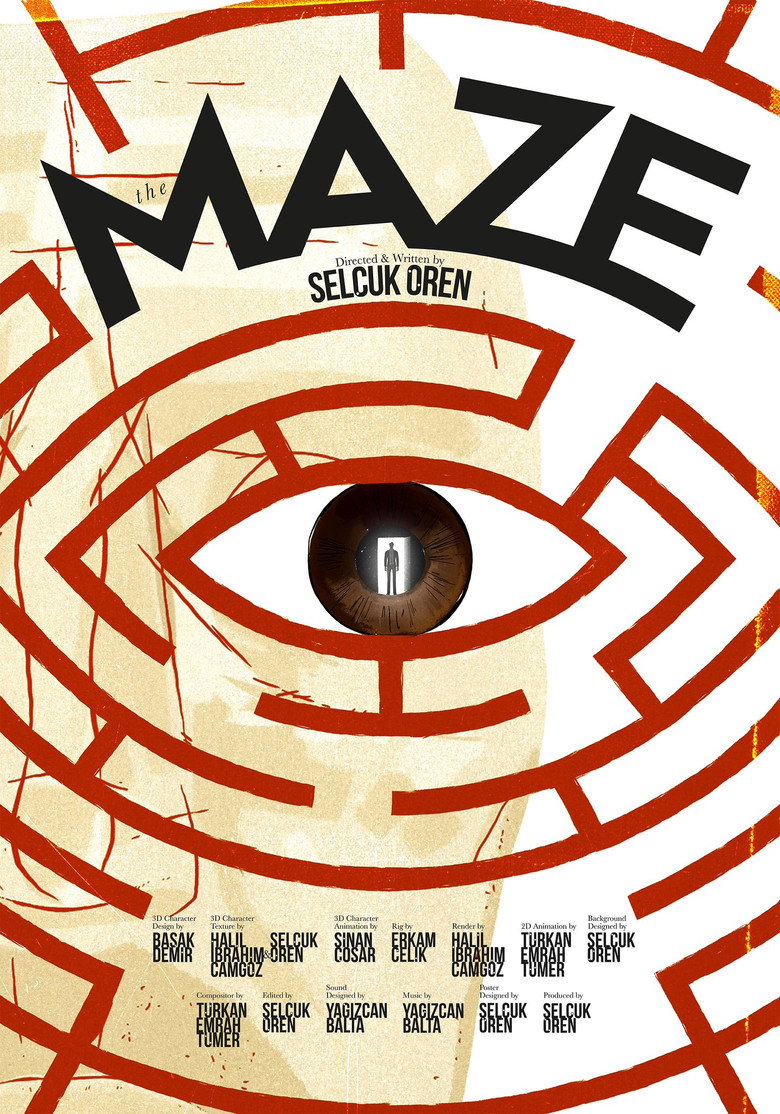
While an exit from the labyrinth is being sought, the cracks in the wall open onto the past. Ören uses space as a psychological map: the longer the corridor grows, the clearer it becomes that what is being fled is inside rather than outside.

The decision to leave has been made; what remains is everyone's reaction to it. Durlanık fits the distance between the one leaving and those staying into a single stretch of preparation, and envy, anxiety and hope end up standing in the same room.

A suggestion, a needle, and a few days in front of the mirror. Bozcu conveys the pressure of beauty through the face itself rather than through argument; the closer the camera stays, the less clear it becomes whose expression this is.

The erasure of one belief system by another is told through an animal allegory in a magical-realist register. Rather than arguing a thesis in five minutes, Yentür works a single image, and the harshness of the telling comes from that indirectness.

The distance between the two meanings of the word "game" is fitted into four minutes.

The ship's interior is rusted, the sounds metallic, the outside endless. Gönen uses science fiction not to build a showy universe but to measure the gap between obedience and hope; every answer the machine gives closes the door a little further.

