Country room
Philippines
In the Philippines, film history is not written but recovered. Of the hundreds of films made before the war only a handful survive today; the rest burned, rotted or sat too long in a damp store room. Some of the films in this room can be seen only because they were restored in recent years.
How do you write the history of a cinema when most of it is gone?
How many pre-war films survive is not a fixed number. Last November another one turned up.
Some films in this room have a poster and no print.
If a film no longer exists, is its history gone too?
Read more
Here restoration is not a technical job but the writing of history itself.
A Golden Lion at Venice. A Golden Leopard at Locarno. Nothing at the Academy.
The country is thousands of islands. Its cinema gathered in almost one city.
This chain is not unbroken. Lost films sit between its links — follow the order and in places you will find a name, a year and a gap.
1950 → 2022

Genghis Khan
A Mongol epic made in the Philippines, and one of the early Philippine films shown at Venice. Conde made it five years after the war ended, at a time when the country had nothing resembling a film archive.\n\nEleven years later the national novel itself reaches the screen.

Noli Me Tángere
Rizal's novel was the heaviest criticism of the colonial period, and de Leon filmed it not as a costume drama but as a reckoning. The print was long counted lost and was restored only later.\n\nFour years later a stage play is filmed as it stands.

A Portrait of the Artist as Filipino
Two sisters, a decaying mansion, and the last days of pre-war Manila. Avellana filmed the stage play as it stood, and that Manila did in fact disappear a few years later.\n\nTen years later martial law has been declared and the camera follows a young man arriving from the provinces.

Manila in the Claws of Light
Julio is looking for his fiancée, and every day the city pulls him a little lower. Made in the third year of martial law, it showed poverty more directly than any film before it.\n\nThe next year the same director enters a house in the slum and does not leave it.

Insiang
A mother, a daughter, and a young man who moves into the house. Nobody protects Insiang and she builds that protection herself — the film screened in the Directors' Fortnight at Cannes.\n\nThree years later somebody turns the camera on his own life and does not make a box-office film.

Perfumed Nightmare
A village driver who admires the American space programme goes to Paris. Tahimik made the film with his own money, on super 8, spread over years — it won the FIPRESCI prize in Berlin.\n\nA year later the camera enters Manila's night and follows six lives at once.

Manila by Night
One night, six lives, and none of them knows the others. The censorship board forced a change of title and had scenes cut — Manila's night was not officially supposed to exist.\n\nThe next year a family cannot leave its own house.
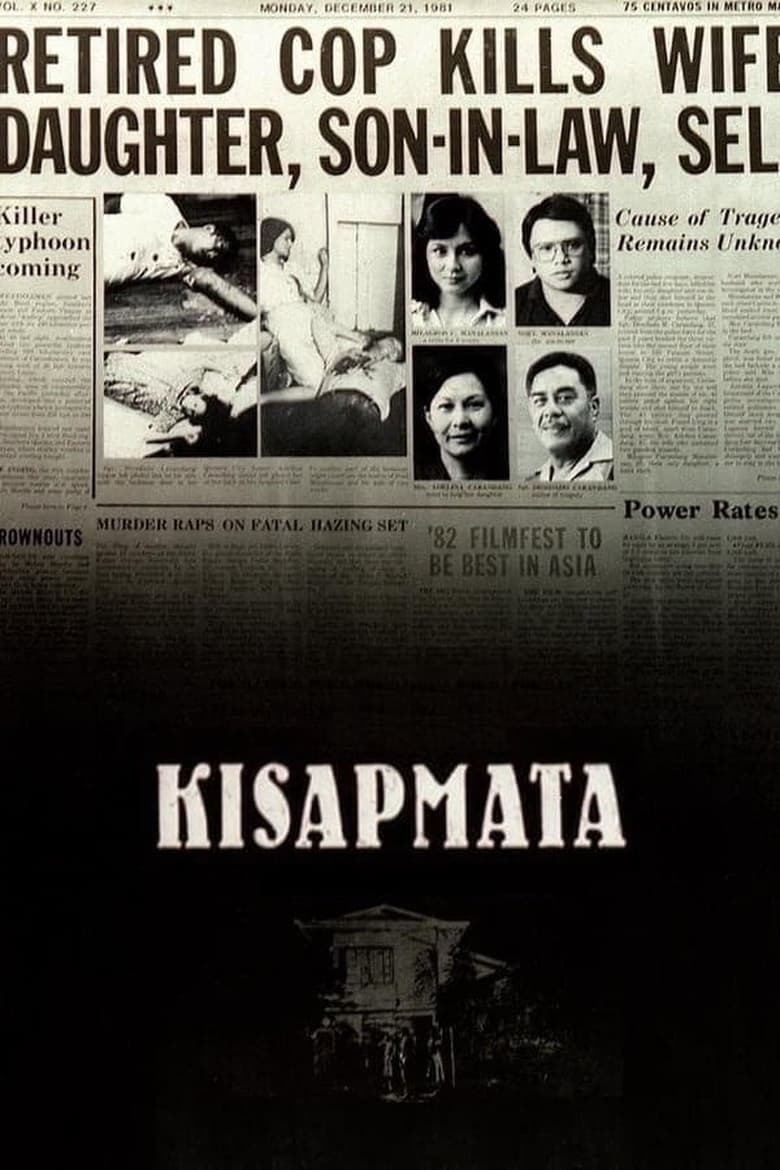
Kisapmata
A retired policeman, a married daughter, and a house locked from the inside. De Leon set out from a real murder and showed authority inside a family.\n\nThe next year a miracle is reported in a village and the buses arrive.

Himala
Elsa did not ask for the miracle, and the town declared her first a saint and then a fraud. Bernal filmed not the faith but the economy built around it.\n\nThe same year new members are admitted to a college fraternity.

Batch '81
A fraternity, an initiation, and violence that keeps increasing. De Leon built the martial law order inside a college lodge, and nobody named what lay outside.\n\nTwo years later a student leaves school and moves into the home of the man she admires.

Bona
Bona serves for nothing and the film never explains that devotion. Martial law would end two years later, and this is Brocka's last major film of the period.\n\nFourteen years later the national hero is told at box-office scale for the first time.

José Rizal
Three hours, a trial, and the last days before an execution. It was the most expensive Philippine production of its time, and its director became one of the country's best-known women filmmakers.\n\nTen years later the digital camera has become cheap and a family runs an old cinema.

Serbis
Things other than films happen in the cinema, and the camera stops nowhere. With this film Mendoza entered the main competition at Cannes and the independent wave became visible abroad.\n\nSix years later a murder is committed and the wrong man goes to prison.

Norte, the End of History
For four hours two lives run in parallel — one inside, one outside and guilty. Diaz carried Dostoyevsky to northern Luzon and made duration the measure of injustice.\n\nThe next year a general shouts and nobody listens.

Heneral Luna
The Philippine-American war is told through one general's rage, and the enemy turns out to be his own countrymen. The film became an unexpected box-office success, and the historical film became possible again.\n\nSeven years later a journalist and a convict stand at two ends of the same system.

On the Job: The Missing 8
A system that takes men out of prison to kill, and a journalist trying to write it down. The chain began in 1950 in a country without archives and ends seventy-two years later with the keeping of the record itself as the question.
Directors in this room


