Country room
Georgia
Every republic in the Soviet Union had its own film studio, and most resembled the centre. Gruziafilm did not: twenty-seven of the thirty films in this room are in Georgian, including those from the Soviet period. Fable instead of heroism, observation instead of victory, and something other than what Moscow expected.
How does a cinema stay separate inside the centre?
There are four stops in this room. The first is the school inside the Soviet Union: eleven films, four directors, and a style running from the sixties into the eighties. The second is allegory and censorship — carrying what cannot be said directly into fable, folk tale and history. The third is independence and collapse: the country separates, two wars break out, and cinema nearly stops. The last is the present.
All five women directors in this room began working after 1991.
1929 → 2025

Eliso
The nineteenth century, tsarist rule, and a Muslim village deported to Turkey. Made in the last years of silent cinema, it is counted the first major film of Georgian cinema. Thirty-six years later an old vine-grower walks into the war.

Father of a Soldier
He sets out to see his wounded son, the son has returned to the front, and the man leaves his vineyard and walks into the war. Chkheidze filmed the war picture not as a narrative of heroism but as a peasant arriving in the wrong place. Four years later a painter sells his canvases to taverns.

Pirosmani
Niko Pirosmani takes food in return, and when he dies nobody knows where his grave is. Shengelaia filmed it in the compositions of the painter's own canvases — the camera sees as he saw. The next year a musician strikes a few beats in the orchestra and spends the rest wandering the city.
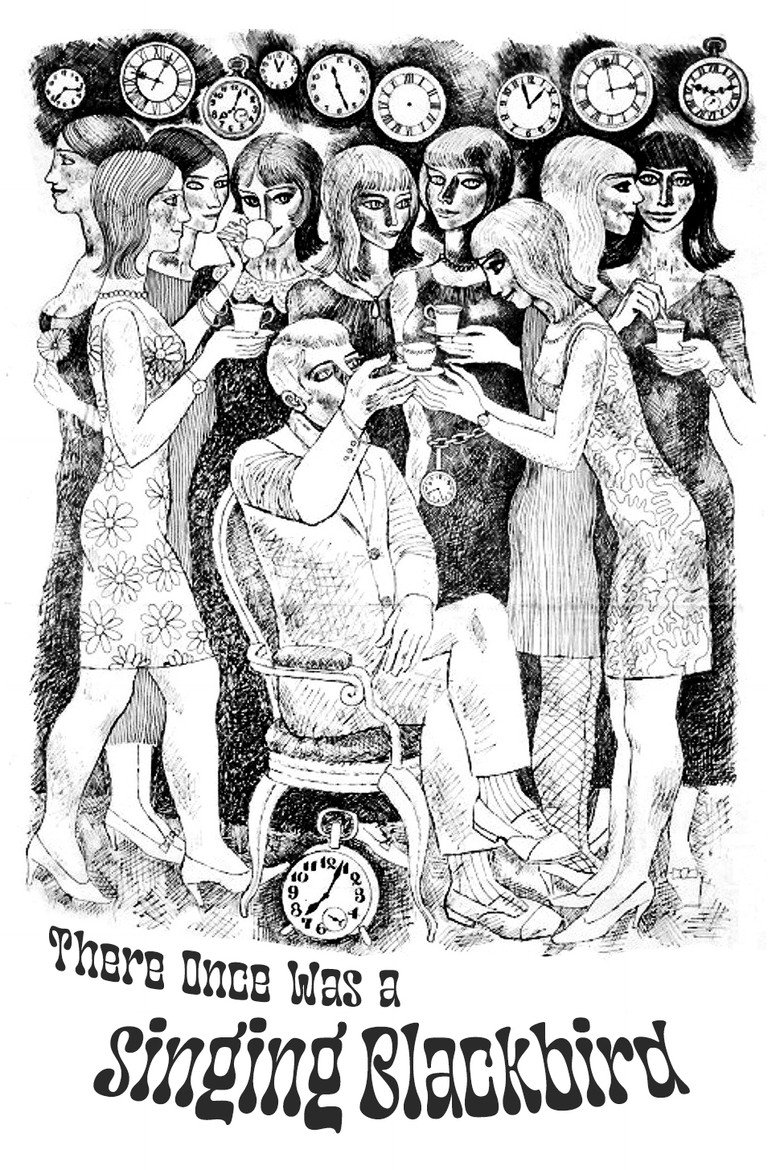
There Once Was a Singing Blackbird
Gia takes nothing seriously and the film does not judge him. The one-line event at the end changes all that lightness in retrospect. Six years later, in a village, custom decides what a woman will do.

The Wishing Tree
Marita cannot marry the man she wants and the village does not even count it a question. Using the fable, Abuladze described how a society submits to its own rules, and the censors read it as a folklore film. Eleven years later a mayor's body keeps returning however often it is buried.

Repentance
Abuladze told the Stalin period as a small-town fable and named it nowhere. The film was shot in 1984, waited three years on the shelf, and when it was shown it was taken as the closing of an era. Two years earlier a young man had been walled into a fortress so that it would not fall.

The Legend of Suram Fortress
The narrative does not advance; the scenes are laid side by side, each standing on its own. Parajanov made it after a gap of fifteen years — he had come out of prison, and Gruziafilm was the studio that let him. The same year a porcelain service passes from hand to hand in Paris, and Georgia is nowhere to be seen.

Favorites of the Moon
A painting and a porcelain service shrink as they wear, and their owners change. Iosseliani made it after settling in France, and it became the last Soviet link in this chain. Eleven years later the country is independent and a French chef arrives in the Georgia of the twenties.

A Chef in Love
Food, love, and a regime approaching behind. Jorjadze described the country as a lost world, and the film was nominated for an Oscar. Seventeen years later two girls leave childhood behind in the Tbilisi of 1992.

In Bloom
A bread queue, a power cut, and a pistol going round in a school bag. The first year of independence is seen here through the eyes of two fourteen-year-old girls. The same year, in the Abkhazian war, two wounded enemies end up in the same house.

Tangerines
Ivo takes no side and heals them both in the same room. There were once Estonian villages in Abkhazia, and when the war began nearly all of them emptied. The next year the river leaves an island, and that island belongs to neither side.

Corn Island
The old man plants corn, in autumn the water comes, and everything he planted goes with the island. The Inguri separates Georgia from Abkhazia, and this film showed the border as a season. Three years later a woman of fifty-two decides to move out alone.

My Happy Family
Manana gives nobody a reason and the family receives it like an illness. The camera does not leave the flat and the family meal is filmed in real time. Three years later a congregation in a provincial town is attacked and nobody investigates.

Beginning
A fixed shot, a long duration, and an attack that stays outside the frame. Kulumbegashvili did not show the most violent moment and did not cut its sound either. The next year two people meet in Kutaisi and the next morning cannot recognise each other.

What Do We See When We Look at the Sky?
The narrator interrupts and tells the viewer to close their eyes. Koberidze broke a love story with the rule of a fairy tale and made Kutaisi a city the narrator speaks to. Four years later a doctor under investigation goes on working.

April
Nina goes on performing illegal abortions in the provinces and nobody asks her why. The chain began in 1929 with a deported village and ends ninety-six years later with work nobody investigates — in between the state changed twice, the silence did not.


