Country room
South Korea
Korean cinema does not force a film to be one thing.
How many genres can one film be at once?
What introduced Korean cinema to the world was not a genre but the ability to change genre. A film begins as comedy, turns into crime halfway through, and arrives at a tragedy nobody expected — and this is not inconsistency but deliberate method.
There is a reason for this, and it lies in history rather than in cinema. In the twentieth century Korea spent forty years under occupation, was then divided, then went to war, then lived thirty years under military rule. A country changing state that many times in so short a span passed the habit into its storytelling: here no situation is permanent, and every scene can break in the next.
The Korean cinema of today was made possible by a political decision. A rule introduced in 1966 obliged theatres to show domestic films for part of the year; by the eighties that share had risen to a hundred and forty-six days. Without the rule, American films would have filled the halls entirely. When the number was halved in 2006, directors and actors took to the street; one returned the medal the state had given him. Today Korea is one of the few countries able to have its own audience watch its own films.
Read more
Censorship is part of that history too. Under military rule scripts were read in advance, films were cut, and some directors were made unemployable. After 1988 control loosened and a very different cinema appeared quickly — in place of those who had been silenced came a generation that had never been silent. Today the harshest Korean films are made with state money; forty years ago the same subjects were forbidden.
The subject of Korean cinema is usually class. Above and below, basement and roof, those who serve and those who are served. In these films the rich are not villains; what is bad is the distance, and the distance does not close. In the same years the country was among the fastest-enriching economies in the world — cinema recorded whom that speed ran over.
And violence. In Korean films violence is not an element of action but a consequence: it lasts long, it is ugly, and it makes nobody a hero. The one who takes revenge usually wins, and after winning is left with nothing. This tone has been widely imitated, and most imitations took only the violence, not the emptiness that follows.
In the rooms below you will meet all of it: a banned director kidnapped and made to shoot films in the north, an investigation in which the serial killer was never found, an actor returning his medal, and a basement that won the world's highest prize.
The Chain
Seventy years, sixteen films

The Housemaid
The beginning of the chain. A housemaid enters a house and unravels a middle-class family's entire order; the question of class Korean cinema has been discussing for sixty years was founded here.

Woman of Fire
Here the director filmed his own 1960 film a second time, now in colour and darker. Returning to the same story three times was not a style but a fixation.

The March of Fools
Made under military rule, it disguised itself as comedy to get past the censor. The daily life of two university students, with a generation's helplessness underneath.

Chilsu and Mansu
Made as soon as censorship loosened, it began Korean political cinema. Two billboard painters work on top of a building and those below take them for protesters.
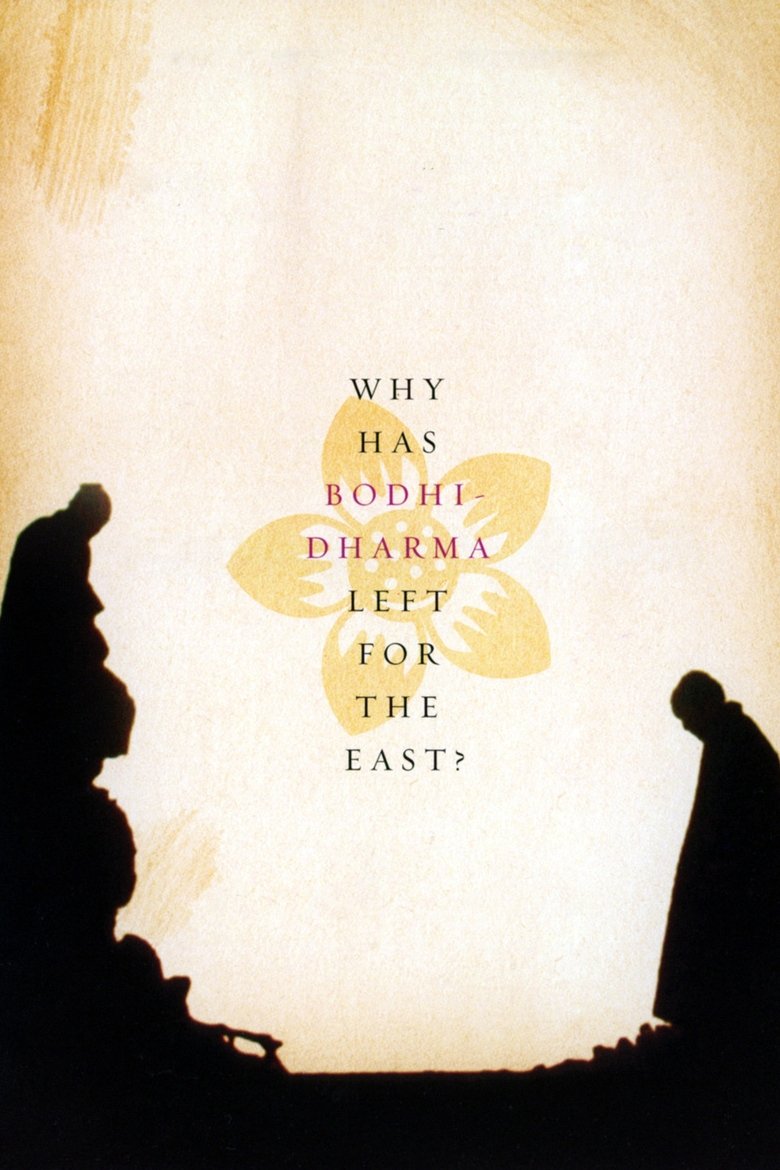
Why Has Bodhi-Dharma Left for the East?
The director made the film alone across years — he operated the camera himself and edited it himself. It won the top prize at Locarno.

Sopyonje
Built on a traditional song form, this film drew an unexpected audience in Korea and proved that domestic cinema had returned.

Green Fish
The first film by a novelist. A young man back from military service finds his neighbourhood demolished and towers going up — Korea's rapid enrichment told this plainly for the first time.

Shiri
This film reached an audience no Korean production had reached and overtook Titanic at home. It was here that the large corporations saw cinema could pay.

Memories of Murder
Based on a real case, and when the film was made the killer had still not been found. The comedy of incompetent detectives turns into a tragedy that cannot be solved.

Oldboy
The grand prize at Cannes became Korean cinema's door to the world. The revenge of a man held in one room for fifteen years; he wins and is left with nothing.

The Host
A creature comes out of the river and a shambolic family goes after it. Here the monster film folded into family comedy and political satire — the clearest case of tonal rupture.

The Handmaiden
A British novel was moved to Korea under Japanese occupation. The same events are told three times, by three different people, and each time something else emerges.

Burning
When the director who had not filmed for eight years returned, he made a film that explains nothing. Nobody knows exactly what happens at the end, and that is the point.

Parasite
The distance between a basement and a roof. It took the top prize at Cannes and the following year the best picture Oscar in America — the first time a non-English-language film had done so.

Decision to Leave
The director known twenty years ago for revenge and violence made a love film this time without anyone laying a hand on anyone. The quietest link in the chain.

Past Lives
Korean cinema is now made outside Korea too. This film was written by a Korean-Canadian, produced in America, and is about having left Korea.


