Mauritania
Med Hondo
The way of telling had to be decolonised too.
Hondo's concern wasn't only what was told but how. He deliberately broke up the narrative order Hollywood had established — setup, conflict, resolution. His films are built of sections: an animation, a cabaret number, a piece of documentary, a folk tale. None of them continues the last.
He didn't do it as a formal game. Africa's own storytelling tradition — the griot telling a story in the square — already worked like this: interrupting, singing, talking to the listener. Hondo carried that onto the screen.
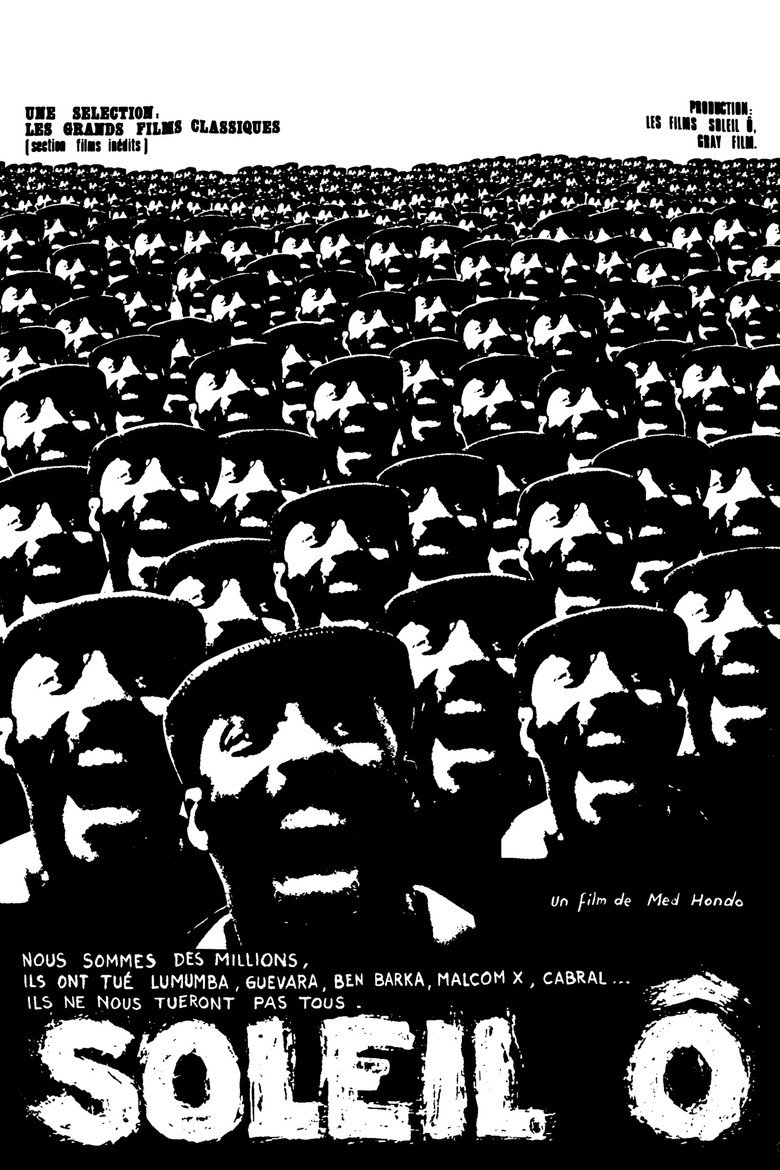
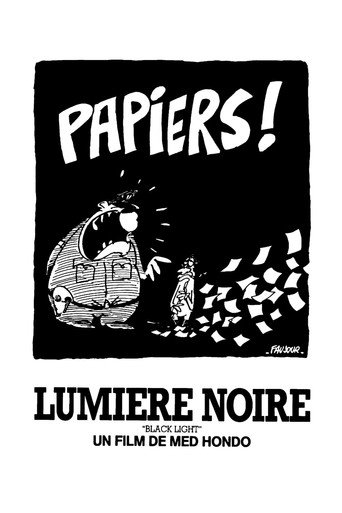
The subject is almost always the same: migration, racism, what is left after the colony. A man arrives in Paris looking for work and is turned away door after door; the story of the slave ships is told as a musical on a theatre stage.
For years he took voice work to finance his own films. He paid for his cinema himself.
- CameraThe form changes between sections — animation into documentary.
- SoundSong and direct address — the audience is spoken to.
- SignatureBreaking narrative order — the griot's method.