Country room
Poland
What do you do when the system is wrong and you are inside it?
How does a director write knowing the censor will read it?
Polish cinema was never free.
That is why it developed a language.
At the end of the seventies a movement in Poland was given a name: the cinema of moral anxiety.
The name is odd but the definition is precise. There is no villain in these films. There is an engineer, a doctor, a party secretary — each doing their job, each compromising a little, none of them believing themselves bad. The film does not judge them. It only shows, and the viewer is made uneasy.
This is not a genre but a condition: staying inside the system and trying to remain clean.
Why it happened here is also clear. Poland lived under a regime for forty years, and that regime funded art. There were state studios, there was a film school — Łódź, among the best in the world. Directors were on salary.
The same state was the censor. The hand that made the film was the hand that banned it.
Read more
That doubleness produced a style: implying what cannot be said. Wajda told the present by filming the war, Kieślowski told the ten commandments by filming an apartment block, Has filmed a novel and told nothing at all — and that nothing was the most dangerous of them.
Then 1989 came and the censorship ended. A generation met an unexpected problem: you are free, so what will you say now?
Finding the answer took twenty years. Ida arrived in 2013 and won the Oscar — black and white, framed in narrow columns, eighty minutes rather than eighty hours. A way had been found to say the unsaid even without a censor.
There are fifty films in this room and most ask the same question from a different place. None of them answers.
The Chain

Kanal
The last days of the Warsaw Uprising and a platoon that goes down into the sewers. At the start the narrator says these are the last hours of their lives. Then we watch for two hours.

Ashes and Diamonds
The last day of the war. A young resistance fighter is assigned to kill a communist official. Zbigniew Cybulski played it in dark glasses and became Poland's James Dean — eight years later he died boarding a train.

Mother Joan of the Angels
Mass hysteria in a convent and a priest sent to perform an exorcism. Kawalerowicz uses nothing but white walls and black habits.

Knife in the Water
A couple, a stranger, a boat. Polanski's first feature and his only Polish film. Gomułka criticised it; it was nominated for an Oscar.

The Passenger
Two women meet on a ship: a former SS guard and a former prisoner. Munk died during the shoot and the film was left unfinished — it was released as it was, and that incompleteness became part of it.

The Saragossa Manuscript
A story inside a story inside another story. It runs three hours and nobody knows where they are. A favourite of Buñuel, Scorsese and Coppola.

Barrier
A young man leaves the dormitory and wanders the city. No narrative, no logic, quick cuts. Skolimowski was twenty-eight.

The Hourglass Sanatorium
A man visits his father and finds that time has stopped at the sanatorium. It won at Cannes and was banned in Poland — Has never filmed with that freedom again.

Man of Marble
A young student researches a worker hero of the fifties and finds that nobody wants to talk. Wajda wrote the script in 1962 and waited fourteen years for permission.

Camouflage
A summer school, two academics. One an idealist, the other adapted to the system. They argue, and the argument lasts a week. This is the definition of the cinema of moral anxiety.

Camera Buff
A worker buys a camera when his daughter is born. Then he starts filming the factory. Then what he films gets other people into trouble. Kieślowski's own move from documentary to fiction is told inside this film.

Man of Iron
Shot while the strike was still going on at the Gdańsk shipyard. Wajda put the real Solidarity leaders in the film and it won the Palme d'Or. About seven months later martial law was declared.

A Short Film About Killing
A murder and an execution. Both are shown at length and both are unbearable. The film is widely credited with reopening the debate on capital punishment in Poland.

Dekalog
Ten parts, ten commandments, one apartment block. Kieślowski shot each part with a different cinematographer. Kubrick praised it in an admiring foreword.

Ida
A novice nun meets her only living relative before taking her vows, and what she learns she did not expect. The frames are narrow, the people always in the lower corner. Poland's first Oscar for Best Foreign Language Film.
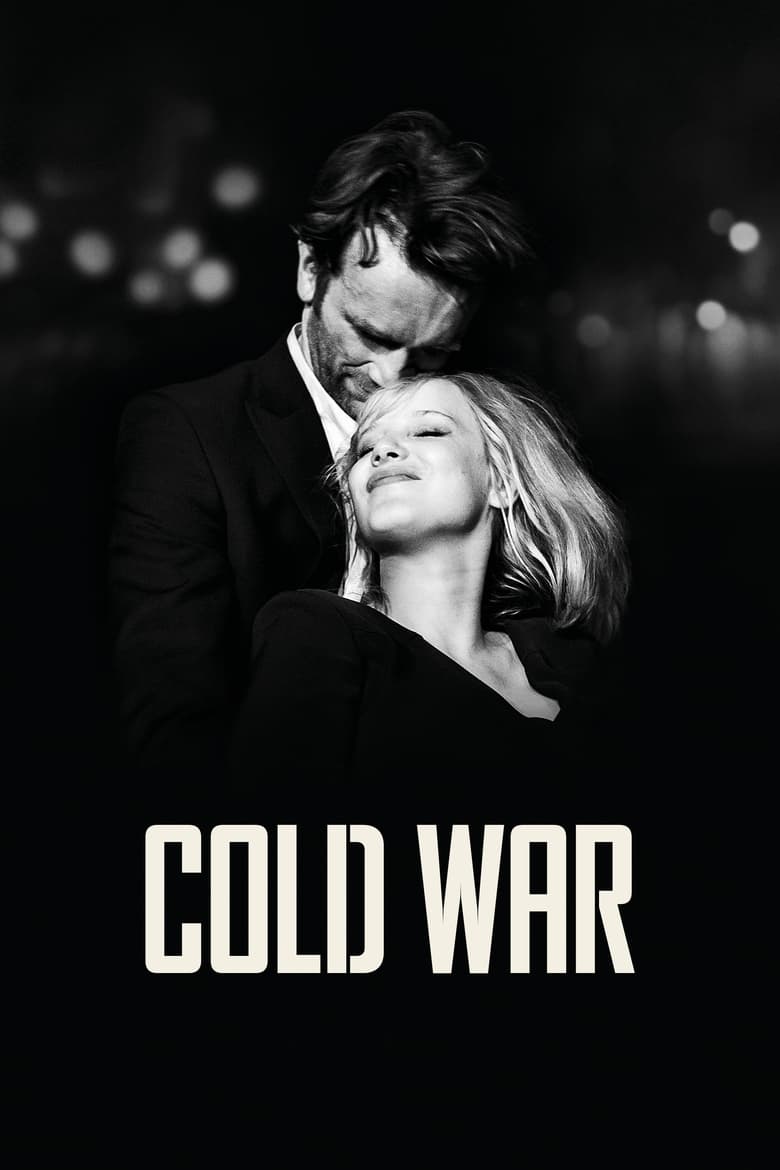
Cold War
Fifteen years, four cities, two people. The film is eighty-eight minutes and skips most of those fifteen years — what it skips outweighs what it shows. Pawlikowski dedicated it to his parents.


